Bioinformatics Guides & Tutorials
Plain-English guides to DNA, RNA and protein analysis: reverse complement, GC content, primer design, ORFs, codon optimization, restriction digests and FASTQ quality.
Looking for quick lookups instead? Browse the reference tables — codon table, restriction enzymes, IUPAC codes and file formats.
Reverse Complement of DNA, Explained
Compute a reverse complement by hand in two steps, then apply it to design a reverse PCR primer from a real target sequence.
5 min readHow to Calculate GC Content of DNA (Formula)
Calculate GC content correctly, then see a worked primer example revealing an 8°C gap between two Tm formulas, and which to trust for annealing temp.
5 min readPrimer Design Basics: Melting Temperature (Tm) and GC Content
A practical guide to designing PCR primers: target length, GC content, melting temperature formulas (Wallace and salt-adjusted), and matching primer pairs.
6 min readOpen Reading Frames (ORFs) Explained
What makes a reading frame open, a worked example of picking the ORF that matters, and exactly how an ORF differs from a CDS or a gene.
6 min readCodon Optimization: How It Works, When to Use It
Optimize a gene for E. coli, human, or yeast: see a worked codon-by-codon example, then check the GC, CAI, and repeat trade-offs before ordering.
6 min readRestriction Enzymes and How to Plan a Digest
How restriction enzymes recognize and cut DNA, the difference between sticky and blunt ends, and how to plan a single or double digest for cloning.
6 min readPhred Quality Scores in FASTQ, Explained
Decode a FASTQ quality string by hand, see why averaging Phred scores overstates accuracy, and learn how N50, L50 and NG50 fit together.
6 min readProtein Molecular Weight and pI Calculator
Calculate protein molecular weight and theoretical pI from a sequence, read the net-charge curve, and see why two pI tools disagree about the same protein.
6 min readDNA/RNA ng to pmol Calculator (With Formula)
Convert ng to pmol for DNA or RNA with the formula, molar-mass shortcuts, and a free calculator using exact sequence composition, not just length.
5 min readHow to Find a Motif or Pattern in a DNA Sequence
What sequence motifs are, how IUPAC codes describe degenerate patterns, and how to search a sequence for a motif on both strands with mismatches.
5 min readDNA vs. RNA: Key Differences Explained
Compare DNA and RNA by sugar, base, and strand, then trace a real transcription example showing why T-to-U swaps miss the mechanism.
5 min readIUPAC Nucleotide Ambiguity Codes: Full Table
All 11 IUPAC nucleotide codes (R, Y, S, W, K, M, B, D, H, V, N) with meanings, complements, and a worked degenerate-primer design example.
5 min readHow to Analyze an Unknown DNA Sequence
Characterize an unknown DNA sequence step by step: composition, ORFs, restriction sites and primers — or get all four in one sequence analyzer report.
6 min readPrimer Dimers and Hairpins: How to Avoid Them
Diagnose primer dimers, hairpins and mispriming from gel bands, then apply the ΔG cutoffs (-9 kcal/mol for hairpins, -5 for dimers) that prevent them.
7 min read
How to Design a CRISPR Guide RNA (gRNA)
Design CRISPR guide RNAs using PAM rules for SpCas9, SaCas9 and Cas12a, plus position-weighted on-target and off-target scoring.
6 min readHow to Design Site-Directed Mutagenesis Primers
Design point-mutation, insertion, and deletion primers for QuikChange or Q5-style mutagenesis, with flanking Tm rules and DpnI/KLD cleanup.
6 min readIn Silico PCR: Predict Products Before You Order
Simulate PCR against your template to predict product size and flag every off-target binding site before you order primers.
6 min readHow to Read a Plasmid Map
Learn to read plasmid maps and the GenBank format (LOCUS, FEATURES, ORIGIN) behind them, plus a step-by-step order for checking a new construct.
6 min readPairwise vs. Multiple Sequence Alignment
Compare global (Needleman-Wunsch) and local (Smith-Waterman) alignment, learn affine gap-open vs. gap-extend scoring, and see when you need MSA instead.
6 min read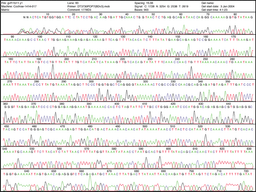
How to Verify a Clone with Sanger Sequencing
Verify a clone by Sanger sequencing: read the chromatogram, trim low-quality ends, and align the trace to its reference sequence.
6 min readGibson vs Golden Gate vs Restriction Cloning
Compare restriction, Gibson, and Golden Gate cloning on scar and fragment limits, then simulate the assembly and design junction primers before ordering.
6 min readReverse Translation: Protein to DNA Sequence
Back-translate a protein to DNA using most-frequent or degenerate IUPAC codons, then score it with the Codon Adaptation Index.
6 min readNearest-Neighbor Tm and ΔG Explained
Calculate oligo Tm and ΔG from nearest-neighbor stacking energies, and use the same math to flag hairpins and 3'-end dimers before a failed PCR.
6 min readHow to Predict a Restriction Digest Gel
Calculate restriction fragment sizes, then simulate the agarose gel with a ladder using Virtual Gel before you pick a percentage or run one.
6 min readHydrophobicity Plots for Transmembrane Domains
Score a sequence on the Kyte-Doolittle scale to flag transmembrane helices past the classic +1.6-2.0 cutoff, then compare with Hopp-Woods.
6 min readWhy and How to Generate a Random DNA Sequence
How a random DNA sequence generator works, why setting a GC target matters, and how to use a scrambled sequence safely as a negative control or filler.
6 min readHow to Fetch a Sequence by Accession Number
Fetch an exact GenBank, RefSeq or UniProt record by accession number, decode NM_/XP_ prefixes, and pin the version suffix for reproducible results.
6 min readConverting Between FASTA and GenBank Files
Convert between FASTA, GenBank and TSV, and pull a CDS or protein straight from GenBank's FEATURES table, complement strand included.
6 min readIn Silico Peptide Mass Fingerprinting Guide
Predict trypsin, Lys-C and chymotrypsin cut sites and peptide masses, including the K/R-proline exception and missed cleavages for mass spec matching.
6 min readBatch Processing Multiple Sequences at Once
Run one operation across a multi-FASTA or chain tools into a pipeline, then export a single CSV table per plate, primer batch, or Sanger read set.
6 min readIdentify Unknown Sequence: DNA, RNA or Protein
Check whether a sequence is DNA, RNA, or protein by its letters, then send it straight to BLAST — one tool does both steps from a single paste.
6 min readCloning a Gene From Scratch: A Complete Workflow From Sequence to Verified Construct
A step-by-step molecular cloning checklist covering source sequence, assembly strategy, primer design, in silico assembly, construct QC, and Sanger verification.
8 min readCRISPR Knockout Workflow: gRNA to Verified Edit
Rank guide RNAs, design genotyping primers before you edit, screen clones by PCR, and confirm the edit by sequencing in the right order.
8 min readProtein Expression Construct Checklist
Follow a 5-step checklist that catches cryptic ribosome-binding-site errors codon optimizers miss, covering codon usage through construct QC.
7 min read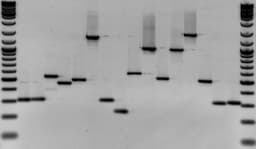
Why Isn't My PCR Working? Troubleshooting Guide
Diagnose no product, multiple bands, primer dimers, and smears in the order they usually turn out to be the real cause, with a fix for each.
7 min read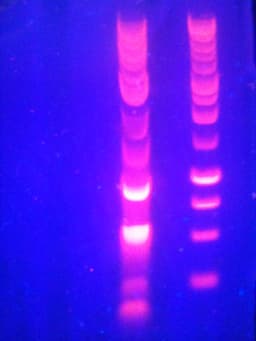
Restriction Digest Not Cutting or Wrong Bands
Troubleshoot no bands, extra bands, or an odd-sized uncut lane by symptom, covering star activity, partial digestion, and topology mismatches.
7 min readColony PCR Troubleshooting: No Bands, Wrong Size
Diagnose colony PCR by symptom: no product, faint bands, or inconsistent colonies. Learn junction-spanning primer design for unambiguous results.
7 min readWhy Is My Codon-Optimized Gene Expressing Poorly? Common Mistakes to Check
Explains why a codon-optimized gene can still express poorly, covering GC extremes, mRNA structure, cryptic motifs, and protein-level solubility limits.
7 min readWallace vs. Salt-Adjusted vs. Nearest-Neighbor Tm: How Much Do These Formulas Actually Disagree?
A data-driven comparison of three primer Tm formulas across primer length and GC content, showing exactly how many degrees C they disagree by and why.
9 min readGolden Gate Overhang Fidelity, Scored Against Real Ligation Data: Three Published Sets vs. Two Naive Designs
Real weakest-link fidelity scores for three published Golden Gate/MoClo overhang sets and two naive designs, computed from T4 and BsaI-HFv2 ligation-count data.
11 min readType IIS Enzymes for Golden Gate and MoClo Assembly: BsaI, BsmBI, BbsI, and SapI Compared
Verified recognition sites, cut sites, overhang lengths, and reaction temperatures for BsaI, BsmBI, BbsI, and SapI, mapped to MoClo, the plant Golden Gate toolbox, CIDAR MoClo, and GoldenBraid.
13 min readThe Anderson Promoter Collection: A Verified Reference Table for BBa_J23100-Series Constitutive Promoters
Verified reference table of the 20 Anderson (BBa_J23100-series) constitutive promoters from the iGEM Registry, with sequences cross-checked against an independent mirror and honestly labeled relative-strength confidence.
11 min readWiring an AI Agent to Real Bioinformatics Tools via MCP
A worked walkthrough of calling SeqBench's MCP server from an AI agent: one JSON-RPC tools/call example and a full Golden Gate domestication chain with gate/provenance data.
11 min readSnapGene vs Benchling vs ApE vs SMS vs SeqBench: A 2026 Cloning Software Comparison
An axis-by-axis comparison of SnapGene, Benchling, ApE, SMS, and SeqBench for cloning design: pricing, assembly simulation, APIs, and overhang fidelity checking.
12 min read
Free Sequence Tools for an iGEM Season: A Phase-by-Phase Checklist
A phase-by-phase checklist mapping free sequence tools to iGEM season tasks: primers, Golden Gate overhang fidelity, pre-synthesis QC, colony verification.
12 min readThe Trust Problem With AI-Designed DNA Constructs
Why AI assistants for cloning and CRISPR design tend to report unverified constructs as finished, and why the fix has to live in code, not in a prompt.
9 min readHow to Open a .dna File Without SnapGene
A colleague sent you a .dna plasmid file and you don't have SnapGene. What the format actually is, four ways to read it, and how to convert it to GenBank and back.
8 min readNo Bands on Your Gel: How to Find Out Why
An empty lane has about six possible causes and they need different fixes. A systematic way to narrow it down, starting with whether the gel or the reaction failed.
9 min readHow to Make a Volcano Plot Without R
What the axes mean, which p-value column to threshold on, and how to get a publication-ready volcano plot from a DESeq2, edgeR or limma table without writing code.
9 min readConverting Gene IDs: Symbols, Ensembl, Entrez, RefSeq and UniProt
Why joining two gene tables loses half your rows: version suffixes, one-to-many mappings, Excel corrupting symbols, and the hub-and-spoke problem behind two-step conversions.
10 min readWhat Does pLDDT Mean in an AlphaFold Structure?
The four confidence bands, what the colors mean, and the crucial thing pLDDT does not tell you — why two confidently predicted domains can still be in the wrong places.
8 min readHow to Run FastQC Without Installing Anything
What each FastQC module measures, the exact warn and fail thresholds it uses, and how to get the same report from a browser without a Java runtime.
10 min readBase Editing Windows and Bystander Edits, Explained
Why a base editor edits more than the base you targeted, where each editor's activity window sits on the protospacer, and how to pick a guide that gets away with it.
9 min readsiRNA, shRNA and ASO Design Rules That Actually Matter
The Reynolds and Ui-Tei rules, why the seed region drives off-target silencing, and how to choose between an siRNA, a vector-expressed shRNA and an RNase H gapmer.
10 min readHow to Open an .ab1 File (Without Installing Anything)
Your sequencing core sent back a .ab1 and nothing on your machine reads it. What the format is, why renaming fails, and which of the usual recommendations are still alive in 2026.
11 min readHow to Design a Ribosome Binding Site for E. coli
Why the same RBS part gives different expression in front of different genes, what a translation-initiation-rate model actually computes, and how to pick a 5' UTR — with real numbers.
13 min readHow to Check a Whole-Plasmid Sequencing Result
Your nanopore whole-plasmid service returned a consensus and a pile of reads. How to tell a real mutation from a basecalling artifact, and why the consensus alone is not the answer.
12 min readHow Allele-Specific Primers Actually Discriminate (KASP and ARMS)
Most 3'-terminal mismatches amplify perfectly well, which is why allele-specific PCR needs a second, engineered mismatch — and why the two primers of one assay rarely need the same one.
13 min readHow to Design a pegRNA: PBS, RTT and the PE3 Nick
A pegRNA is four design decisions stacked on one oligo. What each part does, why the PBS is a melting-temperature target rather than a length, and which candidate to pick.
12 min readFrom a Primer List to a Runnable 96-Well PCR Plate
Turning a list of reactions into a plate map, an Opentrons protocol and an Echo picklist — what those files really contain, and which numbers in them you must replace.
10 min readHow Long Should a Gibson Assembly Overlap Be?
A Gibson primer carries two temperatures that have nothing to do with each other. Which one the overlap length controls, which one it does not, and what a longer overlap actually costs.
11 min readHow to Find an Enzyme That Cuts Your Plasmid Exactly Once
Linearizing a plasmid needs a single cutter in the right place. Why most unique cutters are useless, why a linear scan of a circular plasmid lies, and how to read the list.
10 min readHow to Design a Diagnostic Digest for Clone Screening
Choose a restriction digest that separates the intended clone from empty vector, reversed inserts and misassemblies, with a worked gel example.
11 min readCRISPR Sanger Analysis: Indels vs. Base Edits vs. Knock-ins
Choose the right Sanger analysis for a mixed CRISPR pool: shifted indels, base-edit peaks or one intended knock-in, and know when the fit is not evidence.
13 min readWhy Multiplex PCR Fails: Primers, Tm & Gel Bands
Learn why good primer pairs fail in one tube, how Tm and cross-dimers constrain a panel, and how to space products for an endpoint agarose gel.
12 min readHow to Design an HDR Donor: Arms & PAM Blocking
Design an HDR donor around the cut and intended edit, choose ssODN arm length and strand, and add a PAM block without claiming to predict efficiency.
13 min readWhy Plasmids Rearrange: Direct-Repeat Deletions
Learn how exact direct repeats create plasmid deletion substrates, inspect the candidate products, and redesign and screen an unstable construct.
12 min readInsert:Vector Molar Ratio: Why 3:1 Is Not 3× DNA
Calculate insert mass from vector mass and fragment length, choose a starting molar ratio, and turn the result into pipettable ligation volumes.
10 min readHGVS c., g. and p. Variant Nomenclature Explained
Understand HGVS c., g. and p. descriptions, transcript versions, strand changes and the 3′ rule, with a worked TP53 coordinate conversion.
11 min readRead InterProScan Results: Domains & GO
Interpret InterProScan signature matches, domain coordinates, E-values, integrated InterPro entries and inferred GO terms without overcalling function.
10 min readInterpret GO Enrichment: FDR & Background
Interpret GO enrichment p-values, BH-adjusted q-values, fold enrichment and gene overlap, and choose the correct background for an ORA result.
11 min readHow to Read a Clustered Gene Expression Heatmap
Learn what heatmap colors mean after row z-scoring, how correlation and Euclidean distance differ, and what a dendrogram can—and cannot—show.
11 min readFASTA vs FASTQ: What Actually Differs
FASTQ is FASTA plus one number per base. What that number costs you in file size, why the format needs four lines instead of two, and which one your data should be in.
9 min readProtein Concentration from A280
The extinction coefficient is three counts and three constants. How to get it right, when the reduced and cystine values differ, and the proteins A280 cannot measure at all.
10 min readSix-Frame Translation, and When You Need All Six
Three frames forward, three reverse, and a worked example where every forward frame is junk and the protein is on the minus strand. Plus why this is not the same as ORF finding.
8 min readHow to Open a GenBank (.gb / .gbk) File
A GenBank file is plain text you can read, but the part you want is the FEATURES table — and the canonical pUC19 record has exactly one feature in it. What to do about that.
10 min readChoosing a Buffer for a Double Digest
Two thirds of enzyme pairs work at full activity in one buffer. This is about the other third — plus the two things that sink a double digest even when the buffer is perfect.
9 min readHow to Calculate Delta Delta Ct (ΔΔCt): Worked Example
qPCR fold change by the ΔΔCt method, step by step: average the replicates, normalise to a reference gene, read the sign, then correct for primer efficiency.
9 min readHow to Convert RPM to × g: Formula and Speed Table
Convert centrifuge RPM to RCF (× g) and back with the formula, why your rotor's radius changes the answer, and a table of common microcentrifuge speeds.
7 min readCpG Island Criteria Explained, With Worked Examples
How a CpG island is defined, how the observed/expected CpG ratio is calculated, and why a 100% GC sequence can fail the test while an Alu repeat passes.
9 min readHow to Make 0.5 M EDTA, 1 M Tris and Other Lab Stocks
Masses to weigh for 0.5 M EDTA, 1 M Tris, 5 M NaCl, 1 M MgCl2 and 3 M sodium acetate, the pH steps they need, and why the hydrate on the bottle matters.
8 min readHow to Read BLAST Results: E-value, Identity and Query Cover
What the E-value, bit score, percent identity and query cover in a BLAST hit mean, with three real searches that show how each one misleads on its own.
9 min read